Understanding The Fat Scientific Research
r
@ricardotbcy415
October 2, 2026 · 5 min read
Quality: Fat Metabolic Rate Β-oxidation Sustainable weight administration is feasible and comprehending just how your body reacts to weight loss initiatives can help you develop reasonable assumptions on your journey. A particular type of fat, the brownish kind, is mostly existing in infancy and lessens with age. It's found in your upper back, over your clavicles and around vertebrae. The mice consumed and took in the regular amount of food, however they swiftly burned off the calories. To identify just how this message was sent, the researchers conducted genetic screening of fruit flies. They discovered that a healthy protein called Pvf3 is essential for fat storage space in the fly larvae, which need to preserve power in order to grow. This finding pointed the scientists to the equivalent healthy protein in computer mice, PDGF-CC. If Acetyl-CoA appears acquainted, it's since it is likewise generated when mitochondria use sugar as a fuel. After the first stage of cardiovascular respiration, Acetyl-CoA is created from the break down of glucose (through pyruvate).
Formation Of New Fat Cells
Under typical circumstances, though, people save just sufficient glycogen to give a Posture improvement day's worth of energy. Plant cells do not produce glycogen however rather alter sugar polymers known as starches, which they keep in granules. The electron transport chain in the mitochondrial membrane layer is not the only one that produces energy in living cells. In plant and Cryolipolysis side effects other photosynthetic cells, chloroplasts likewise have an electron transport chain that harvests solar power. Despite the fact that they do not include mithcondria or chloroplatss, prokaryotes have various other kinds of energy-yielding electron transportation chains within their plasma membrane layers that also generate power.Exactly how to fool your body into shedding saved fat?
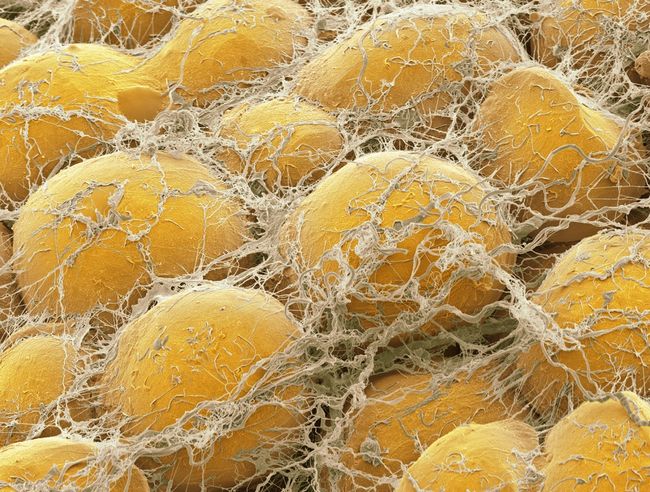
What Is Adipose Tissue?
Adrenaline release during workout, specifically HIIT (High Strength Interval Training), therefore boosts the failure of fat stores and is an effective means of reducing body fat percent. Accordingly, fats are essential both as a gas resource for working out muscles and as an energy store for times of demand (e.g. throughout fasting). In order to supply a cell with power, these molecules have to pass throughout the cell membrane, which operates as a barrier-- yet not an impassable one. Like the exterior wall surfaces of a residence, the plasma membrane is semi-permeable. Metabolic settlement isn't the only manner in which your body's can avoid weight loss or urge weight gain. The resulting sugars and fats-- simply put, polysaccharides and lipids-- are then kept in reservoirs within the cells, several of which are huge sufficient to be noticeable in electron micrographs. Glycolysis is an old, significant ATP-producing pathway that takes place in mostly all cells, eukaryotes and prokaryotes alike. This procedure, which is additionally referred to as fermentation, takes place in the cytoplasm and does not require oxygen. Nevertheless, the fate of the pyruvate created during glycolysis depends upon whether oxygen is present. In the absence of oxygen, the pyruvate can not be completely oxidized to co2, so numerous intermediate items result. Research study suggests that variations of your ACSL5 gene influence the levels and task of your ACSL5 enzyme. This, subsequently, affects exactly how successfully your cells can use fatty acids for energy. Once fatty acids have actually been exchanged fatty acyl-CoA and delivered right into mitochondria, they can then be used to create ATP-- our cells' energy currency. The procedure of transporting fatty acyl-CoA throughout the mitochondrial membrane layers is helped with by numerous transportation proteins. A few of these transporter healthy proteins (e.g. CPT1 and CTPII) utilize an amino acid called carnitine.- Your fat metabolic rate (beta oxidation) characteristic analyzes exactly how successfully your muscular tissue cells can use fatty acids as a resource of gas.
- Even subtle useless cycles-- procedures in which molecules are continuously developed and broken down-- eat power and produce heat.
- Professional athletes who "carbo-load" by eating pasta the night before a competitors are trying to raise their glycogen books.
- It is easier to keep your set factor weight because your body wants to continue to be then-- not lose weight.